In the last post, I claimed that the next thing I would be working on was adding stakes to the game world: homes to build, treasures to discover, losses to guard against, and so forth. In retrospect, I have come to the conclusion that I have done what's called "lying", and none of those things were pursued over the last week and a half.
Instead, I've been doubling-down on making the world look somewhat less garbo. There are two main fronts this work has fallen along and a third front that is not visual, but is nevertheless essential for supporting the visual improvements.
Going Dutch
Whenever I go to an art museum, I invariably find the highlight (or at least one of the highlights) to be Dutch romantic paintings. Something about the soft lighting, hazy fog, and idyllic environs compels my inner pastoral LARPer. I see those beautiful scenes and instantly become an out-of-touch noble having their servants run a farm so that they can indulge in cosplaying as a salt-of-the-earth shepherd. But not an actual shepherd, because my nails. And also I don't like dirt. Would love to have a pet sheep, though.
Anyway, 1800s Dutch romantic paintings. I'm starting to move the art direction of the game towards that, which at this stage mostly means adjusting lighting (skewing the color palette towards a single unifying color), giving clouds actual volume (otherwise you can't see shadows and highlights — when the sunlight hits a cloud in real life, the rims of the cloud will be much brighter than the center), and changing the color grading to avoid stark white and black.
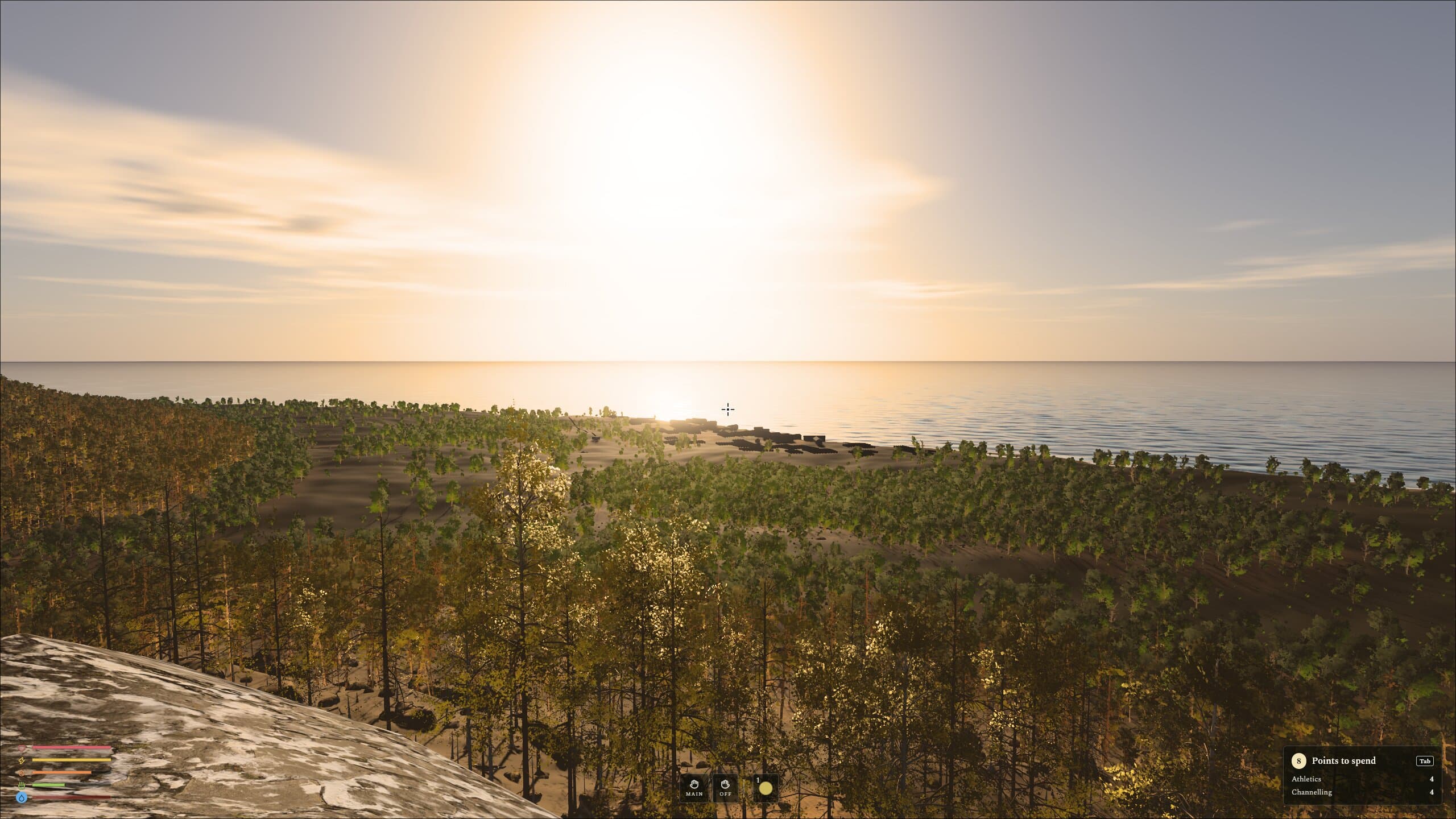
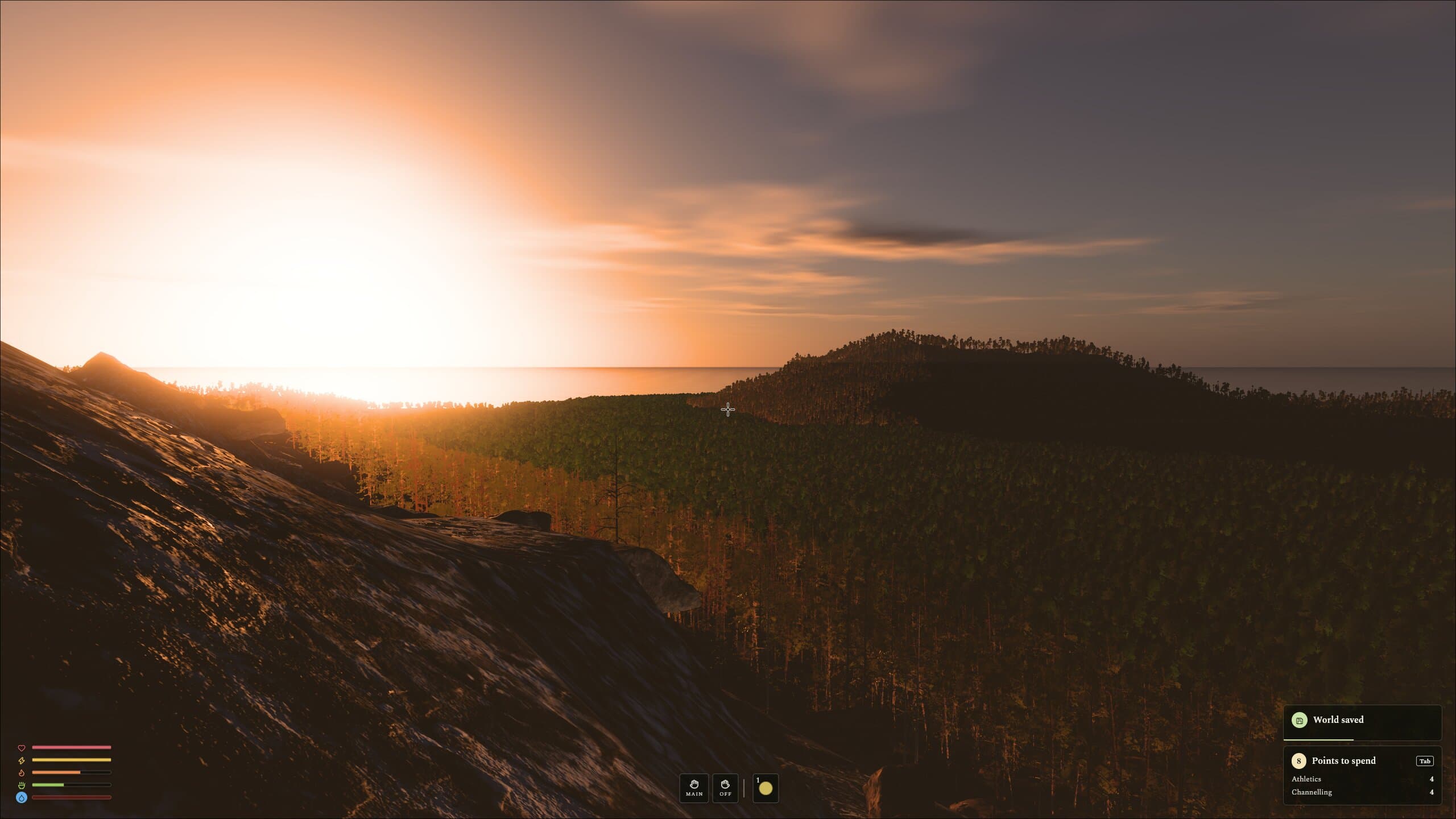
UI overhaul
Most of the game's UI has been a complete placeholder up to this point: as long as it conveyed the bare minimum information and actions necessary for someone to navigate the game world, it was fine. I spent some time this weekend iterating on changes to the HUD as well as the tab menu (which encompasses the character, inventory, crafting, magic, and build screens). The HUD is now a translucent, dark, minimal set of elements intended to avoid distractions during gameplay. The tab menu retains the paper-like palette that the game's main menu uses, since a menu explicitly opened by the player should be more of a focal point than a persistent in-game overlay is. The migration isn't fully finished, but I'm pleased with how it's coming along.
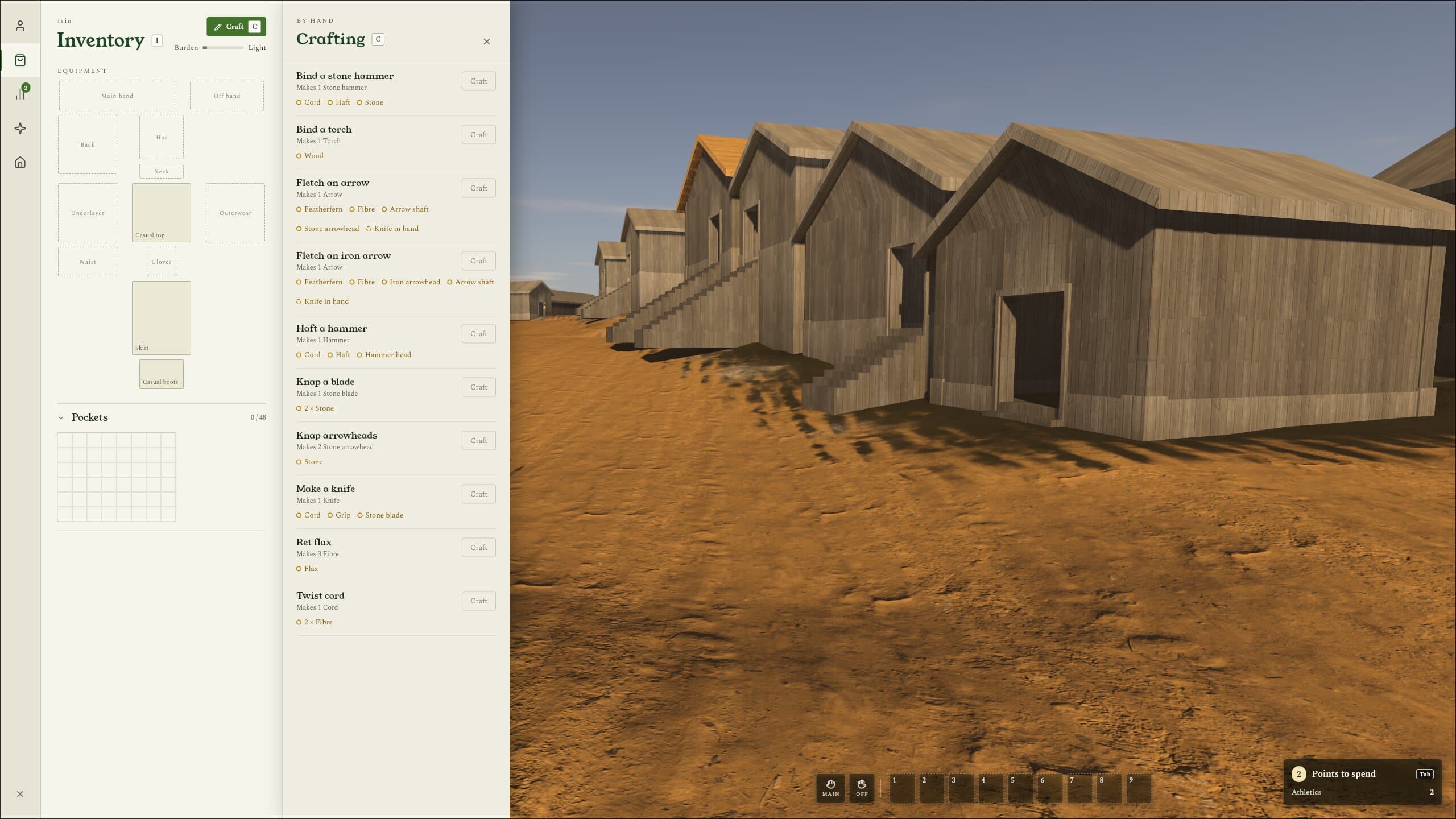
That's going to be a recurring thing in these blog posts. You're going to be seeing a lot of unfinished, kinda janky work, because this game is incredibly unfinished and pretending that it's more polished than it actually is is just, like, a hassle that I really don't need in my life.
Optimizations at scale
The third front I've been chipping away at is a question of scale. For reference, Morrowind's map clocks in at roughly 15 square kilometers. Skyrim's map is 40 square kilometers. Kenshi's map is 870 square kilometers. Untold Lore needs to land somewhere between Skyrim and Kenshi.
Right now the map is ~2 square kilometers. The next milestone (which I think the engine will already support without additional improvements — I just haven't painted out more of the map yet) is 10 square kilometers. The eventual goal pre-release is 100 square kilometers.
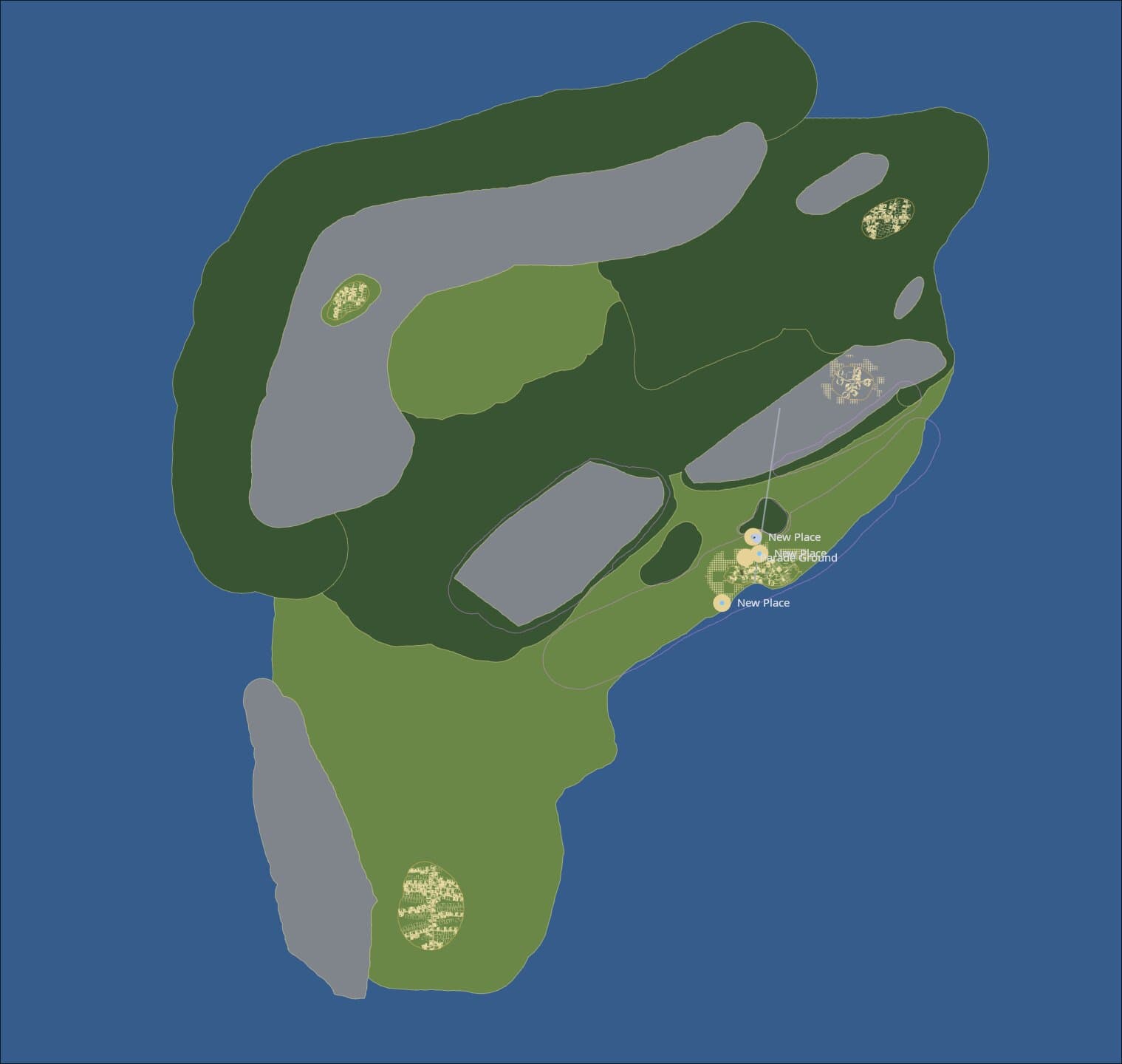
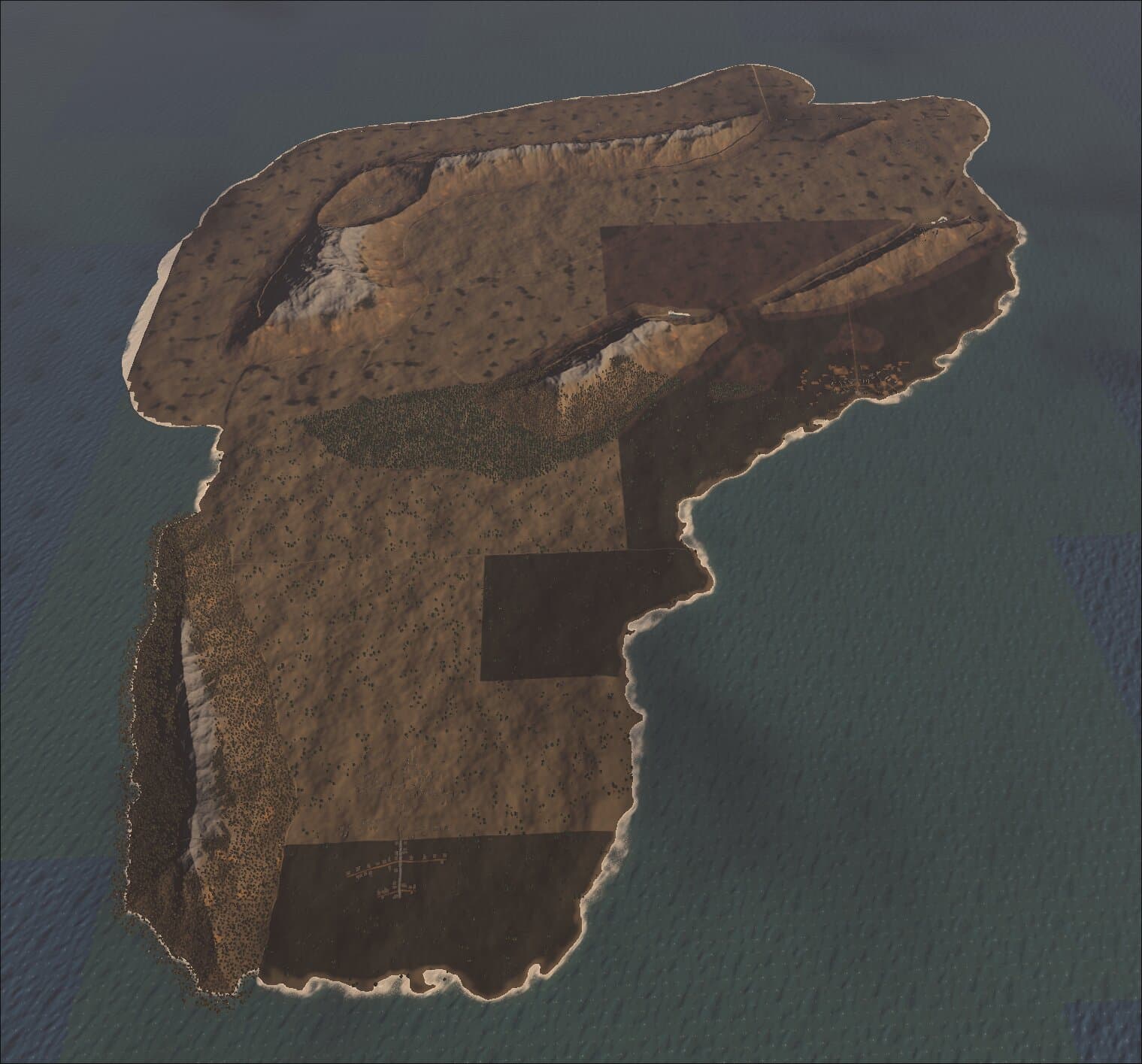
The cycle I've noticed over the last 9 months of development on this specific iteration of Untold Lore (which stands amidst a graveyard of failed previous attempts at building Untold Lore) is that a given architecture will support a map of size X square kilometers and the next architectural iteration supports a map of size X2 square kilometers. If that trajectory holds, it stands to reason that the next major refactor of the map making system will put us somewhere around the 100 square kilometer goal.
That reasoning, unfortunately, is a bit deceptive. The major Achilles' heel I'm anticipating is that the map is currently static (mostly). As soon as we add in simulation elements (say, an economy between settlements) or start actually stress-testing networking (how well can a server support 100+ players?) we introduce entirely new classes of scaling problems that we'll also have to address. Stay tuned to see what hurdles inevitably come up.