This update is all about bringing a world from "static" to "dynamic". Where we left off, we had the ability to draw a map and see a world generated from that document. Shortly after that update, I ran headfirst into a blocker I flagged several weeks ago: in order to scale a world from a few square kilometers to hundreds of kilometers, we need to deal with simulating at scale, not just drawing at scale. From an architectural standpoint, it's as though we've just zoomed out 100x from what we were previously focusing on — namely, making a world that's reasonably pleasant to walk around in. Everything that we already built is still necessary, but now it must be wrapped in a lower-fidelity depiction of the world that runs when no players are around.
Think of it like a grid of cells. Up until now, we have been focused on one cell. We already ran into computational limitations that we've had to work around for a single cell — what happens when we're suddenly dealing with a 10x10 grid of cells?
The solution is conceptually simple: every cell that has no players gets a cheaper version of the simulation. When an NPC is next to a player, they are walking in a physics simulation. When an NPC is not next to a player, they are conceptually "at a place" — no physics involved. Similarly, we do not track individual people at low-fidelity. A town simply has a set number of residents with no names or faces associated. When you walk into a new cell, the game recalculates what each person out of the, say, 200 residents of the settlement looks like. Because the calculation always turns up the same results, we don't actually have to store potentially tens of thousands of people. We just recalculate on demand.
- H
- High fidelity
- L
- Low fidelity
There's one catch here: if a town has 200 people who are all just "at town" instead of "walking home, on the corner of 1st and Main Street", what do players outside the cell see when they look at the town in the distance? To avoid every settlement turning into a ghost town once you step out of the gates, we also have an intermediate version of the simulation — something that's inexpensive computationally, but still going through the motions of a living world.
- H
- High fidelity
- M
- Medium fidelity
- L
- Low fidelity
When multiple players are connected to the server, it fills in additional cells. This can still get expensive at higher player counts; it's not a perfect system. We'll see how far it takes us before we have to revisit optimization.
- H
- High fidelity
- M
- Medium fidelity
- L
- Low fidelity
Critically, both the high-fidelity and low-fidelity simulations are writing to the same underlying data. This is what makes the hand-off between the two systems possible. So what is that data? What sort of a simulation are we building with this new system?
Welcome to Economia
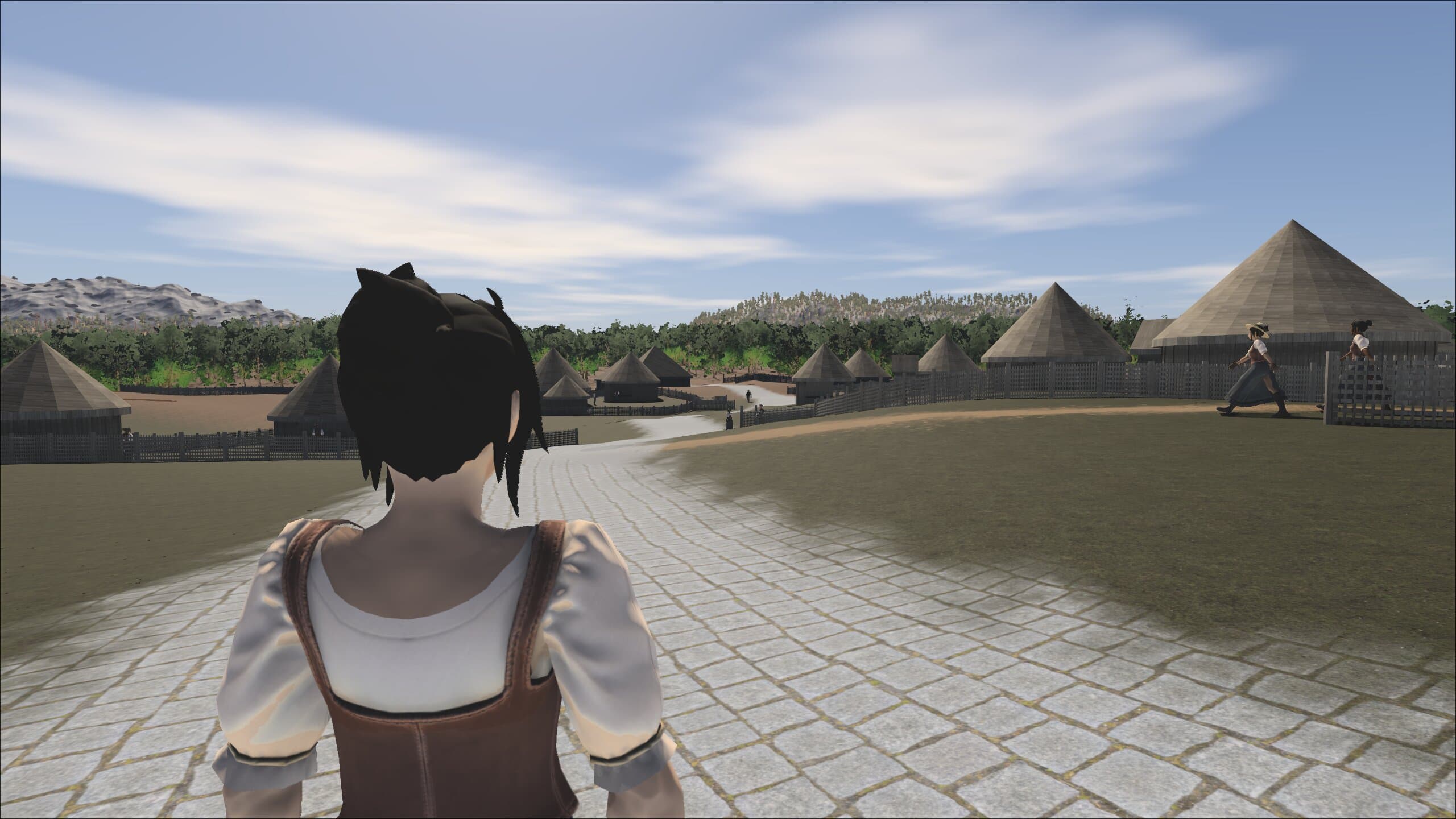
An island of prosperity and free trade. I mean that literally, it's free to trade because this is a work in progress and money isn't balanced yet. Five settlements have an assortment of farmlands that produce items; those items are processed by workshops in the settlements. Caravans formed by organizations can travel as groups on a trade mission, where they will buy items at the destination that are cheaper based on supply and demand than the same items are at the origin.
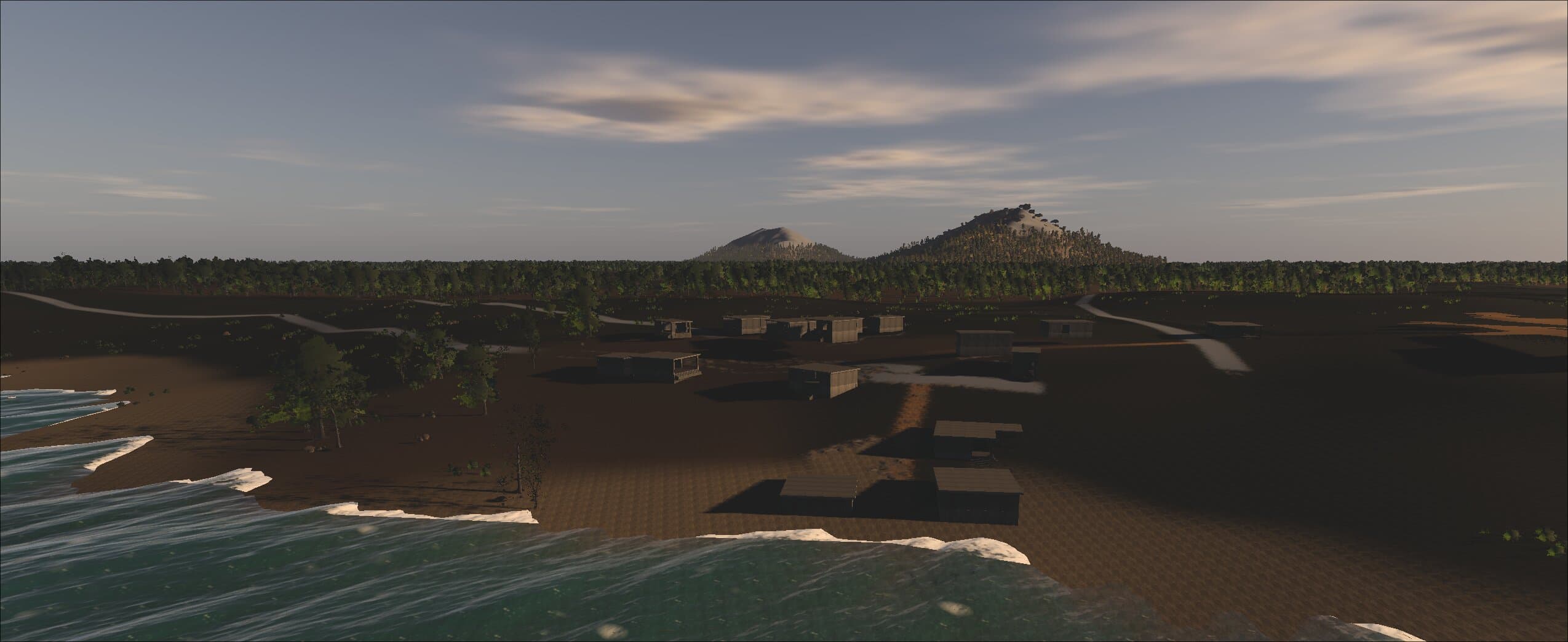
Note the bolded words — that isn't just a typing quirk. Those nouns make up the core of the data model I mentioned. A settlement might have a workshop associated with it; that workshop has both a low-resolution version ("workshop exists at settlement") and a high-res version that can be calculated on demand à la procedural generation ("workshop is at coordinates X,Y with building dimensions W,H ...").
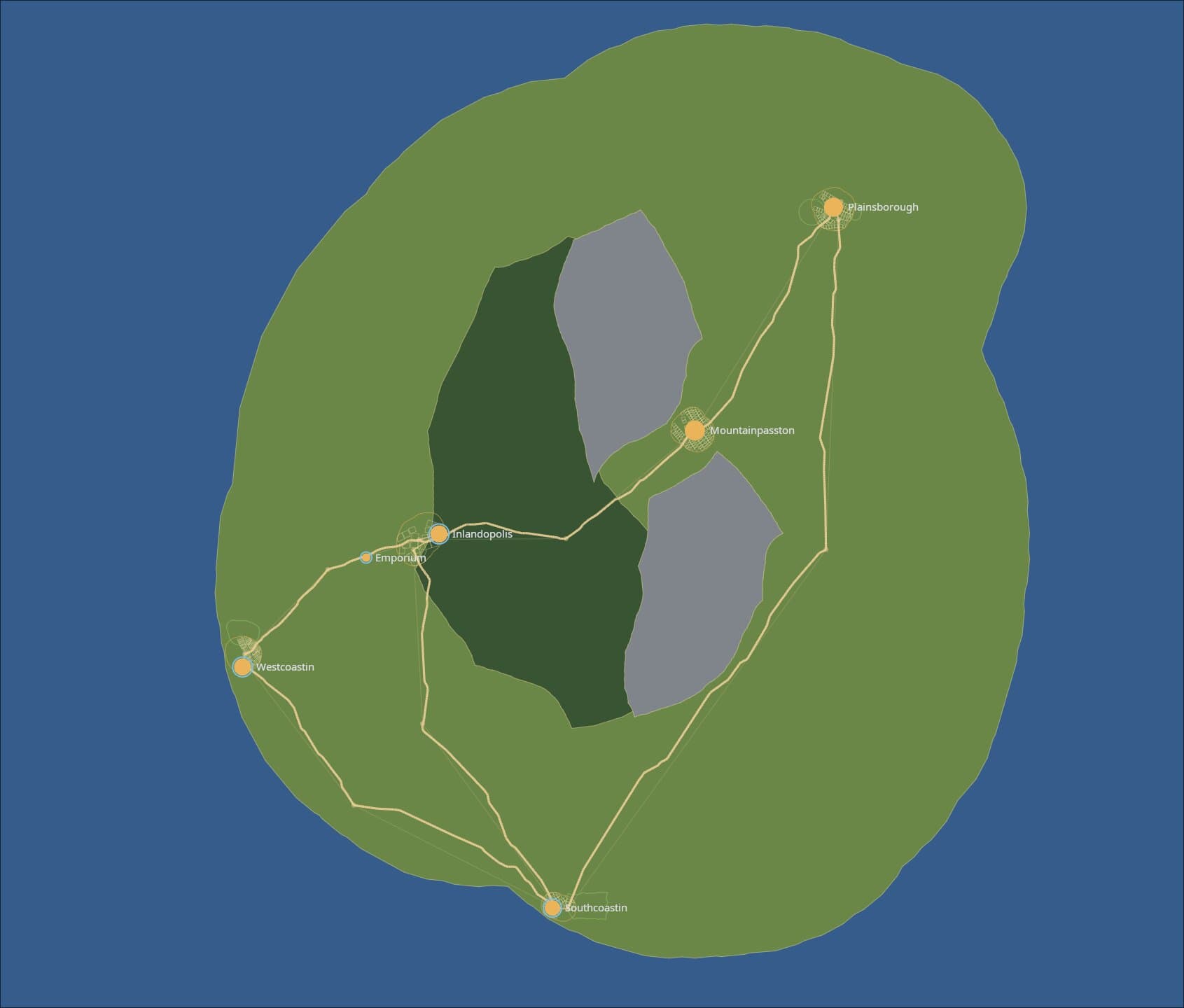
All five settlements — Westcoastin, Inlandopolis, Southcoastin, Mountainpasston, and Plainsborough — were placed by me in the map editor. But what of the Emporium?
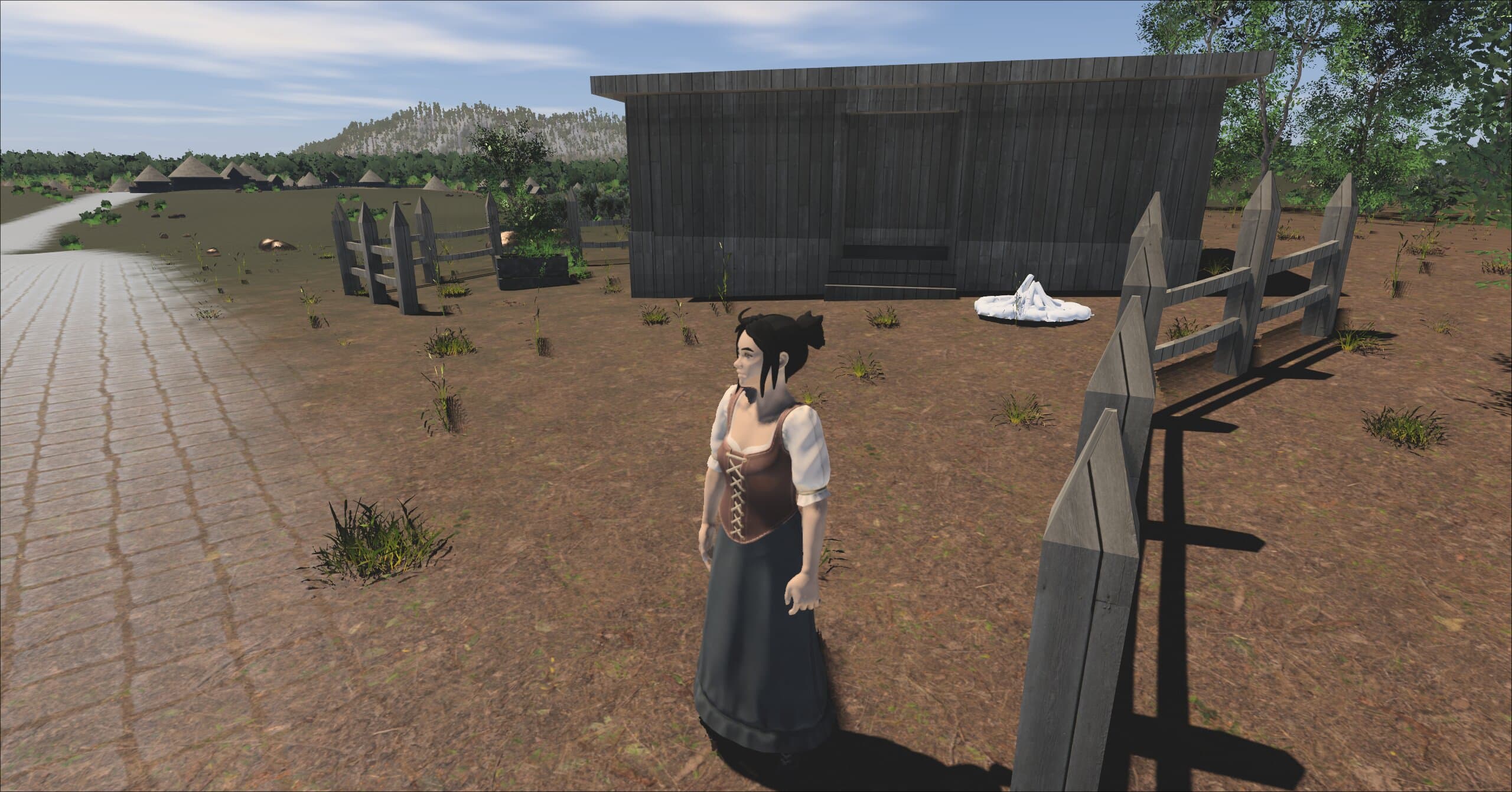
Also placed by me. But this time not in the map editor. The Emporium was built in-game, using the same tools available to players. After constructing a building, a player can found their own settlement. If that settlement is near a road they can tap into the trade network along that road, but to do so they'll need to build a shop counter. The part of this that's incomplete is the actual UX for how a player manages a shop inventory, so this loop is still incomplete. Players can also create an organization and build a desk from which they can issue orders, including creating caravans of their own. The other missing link is the ability to actually recruit for your organization — that will be addressed in a future dev log.
After a very long time, we finally have a world capable of motion. Now we need to iron out many rough edges, spend some time cleaning up tech debt, and then tackle the next big challenge: adding danger to the world. As a prospective merchant prince, you should have a vested interest in ensuring bandit camps are dislodged, lairs are cleared out, and that your caravans are well-defended as they travel from place to place.